
Asbestos Clearance Testing
Failing an asbestos clearance inspection usually means the work area cannot be released for reconstruction, occupancy, or normal use until the problem is corrected and the area passes follow-up testing.
This can delay construction projects, insurance repairs, tenant re-entry, commercial renovations, property reopenings, and post-abatement reconstruction work. In many situations, the failed clearance issue must be corrected, re-cleaned, and retested before the project can move forward safely.
What Does It Mean to Fail an Asbestos Clearance Inspection?
An asbestos clearance inspection is designed to determine whether a work area is ready to be safely released after asbestos-related work has been completed. Depending on the project, the inspection may involve visual review, air monitoring, documentation review, containment evaluation, or post-abatement air clearance testing.
If the area fails clearance, it usually means the inspector identified conditions that prevent the area from being considered clean, safe, or ready for normal occupancy or reconstruction.
Visible Dust or Debris
Remaining dust, residue, or suspect debris may indicate the area was not cleaned thoroughly enough.
Failed Air Samples
Air monitoring results may indicate airborne fibers or contamination concerns that require additional cleaning or correction.
Containment Problems
Inspectors may identify containment failures, damaged barriers, or concerns about cross-contamination.
Incomplete Cleanup
Materials, residue, or suspect areas may still require additional cleaning or removal work.
Germ Masters provides asbestos clearance inspections in Tampa Bay for commercial projects, renovation work, demolition projects, schools, healthcare facilities, property managers, and post-abatement verification needs.
Why Asbestos Clearance Inspections Fail
Failed clearance inspections can happen for several reasons. In some cases, the issue is minor and can be corrected quickly. In larger commercial projects, a failed clearance can significantly delay reconstruction schedules, tenant reopening, inspections, and permit timelines.
| Reason Clearance Fails | What It Usually Means | Typical Next Step |
|---|---|---|
| Visible debris or dust | Work area may not have been cleaned thoroughly | Re-clean and re-inspect |
| Failed air monitoring | Airborne contamination concerns remain | Additional cleaning and retesting |
| Containment issues | Fibers or debris may have escaped containment | Containment correction and inspection |
| Incomplete removal | Suspect material or residue may still remain | Additional abatement work |
| Documentation problems | Project records or scope details may be incomplete | Clarify documentation and retest |
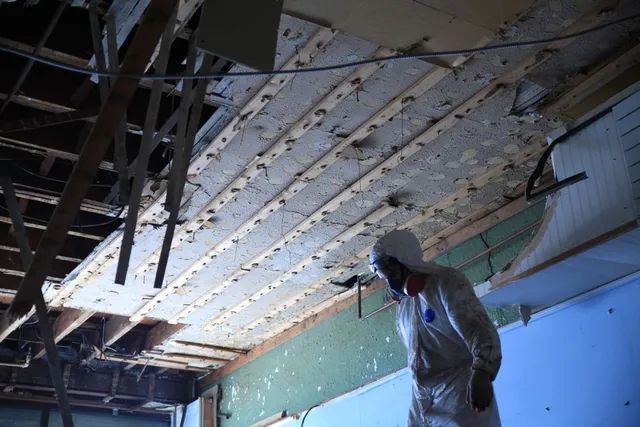
What Happens After a Failed Clearance Inspection?
After a failed asbestos clearance inspection, the affected area usually remains restricted until the issue is corrected and the area passes additional clearance testing. In many situations, reconstruction, occupancy, or reopening cannot move forward until the clearance process is successfully completed.
The next steps depend on why the area failed. Some projects only require additional cleaning and follow-up testing, while others may need containment corrections, additional abatement work, or expanded inspection.
Failed Clearance Is Documented
The inspector identifies issues such as failed air samples, visible debris, contamination concerns, or containment problems.
Corrective Work Begins
Additional cleaning, containment repair, or asbestos removal work may be required before retesting.
Retesting Is Scheduled
Follow-up visual inspection or air clearance testing is completed after corrections are made.
Project Can Move Forward
Once clearance passes, reconstruction, occupancy, or reopening can typically continue.
Can People Re-Enter After a Failed Clearance?
In most situations, the affected work area should not be considered ready for normal occupancy until the failed clearance issue has been corrected and follow-up clearance requirements have been satisfied.
This is especially important in schools, healthcare facilities, commercial buildings, apartment complexes, offices, and tenant-occupied properties where exposure concerns, liability, and project documentation are closely monitored.
Independent Clearance Testing Matters
Independent third-party asbestos clearance testing helps provide objective documentation after asbestos-related work is completed. Germ Masters also provides support for AHERA asbestos inspections , commercial asbestos projects, and post-abatement clearance testing in Tampa Bay.
Who Is Responsible for Fixing a Failed Clearance?
Responsibility depends on the project scope, contract terms, and the reason the area failed. In many cases, the asbestos abatement contractor is responsible for correcting cleanup or containment issues before the project can pass final clearance.
Property owners, contractors, project managers, insurance representatives, consultants, and environmental inspectors may all become involved when clearance fails because reconstruction timelines, occupancy schedules, and compliance documentation can be affected.
Related Germ Masters Resources
How Long Does Retesting Take?
Retesting timelines depend on the size of the project, the amount of re-cleaning required, scheduling availability, air sampling requirements, and lab turnaround time. Smaller projects may move quickly, while large commercial or institutional projects can require additional coordination and documentation.

Failed Clearance Can Delay Reconstruction and Reopening
Failed asbestos clearance inspections can affect much more than the cleanup itself. In commercial buildings, schools, apartment complexes, offices, healthcare facilities, and renovation projects, a failed clearance can delay reconstruction schedules, tenant occupancy, inspections, permits, and reopening timelines.
Property owners and contractors may not be able to move into the next construction phase until the area passes final clearance and the required documentation is complete.
How to Reduce the Risk of Failing Clearance Again
- Keep containment barriers intact until clearance is completed.
- Avoid re-entering the work area too early.
- Verify the area has been thoroughly cleaned before retesting.
- Address visible dust or debris before scheduling clearance.
- Use independent third-party clearance testing whenever possible.
- Confirm project documentation and work scope are complete.
- Schedule retesting quickly to reduce project delays.
Asbestos Clearance Inspections in Tampa Bay
Germ Masters provides asbestos clearance inspections, post-abatement verification, asbestos testing, and environmental inspection support throughout Tampa Bay for commercial properties, renovation projects, schools, healthcare facilities, contractors, property managers, and insurance-related projects.
Services are available throughout Tampa, St. Petersburg, Clearwater, Wesley Chapel, Hillsborough County, Pinellas County, Pasco County, and surrounding areas.
If a project has stalled because of a failed clearance inspection, Germ Masters can help identify the next testing step, review the affected area, and provide objective documentation for reconstruction and project planning.
Need post-abatement testing support?
Schedule Asbestos Clearance Testing in Tampa Bay
Germ Masters Environmental provides asbestos clearance inspections and post-abatement testing support for commercial buildings, renovation projects, schools, healthcare facilities, and insurance-related restoration work throughout Tampa Bay.
Contact Germ MastersFrequently Asked Questions
What happens if asbestos clearance fails?
The affected work area usually remains restricted until the issue is corrected and the area passes follow-up clearance testing.
Can people re-enter after a failed clearance inspection?
In most situations, the work area should not be treated as ready for normal occupancy until clearance requirements have been satisfied.
Why did my asbestos clearance test fail?
Failed clearance may involve visible debris, failed air samples, incomplete cleaning, contamination concerns, or containment problems.
Who pays for retesting after failed clearance?
Responsibility depends on the project agreement, scope of work, and reason the area failed clearance.
Should asbestos clearance testing be done by a third party?
Independent third-party testing helps provide objective documentation after asbestos-related work has been completed.


